By: Arya S. (Sacramento Regional Mensa)
In October, a routine maintenance of the school gardens revealed a colony of common isopods (Armadillidium vulgare). An isopod, commonly called the roly-poly, is not an insect. Rather, it is a crustacean, thriving where moisture accumulates.
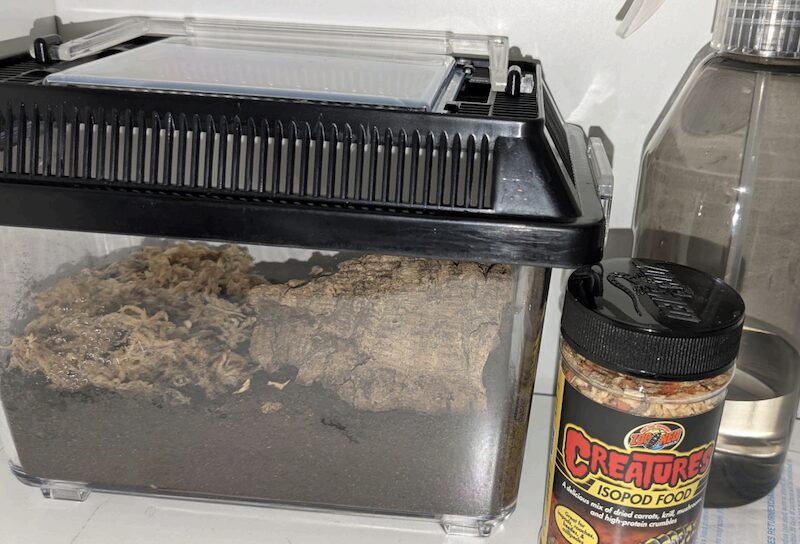
I carefully collected a few residents (precisely four) for observation and later transferred them to a small bowl-sized container. Upon further research, I purchased the appropriate supplies from PetSmart and created their first real bioactive enclosure.

First Habitat (October 2025)
Isopods are more than just distant relatives of crabs. They are vital detritivores, feeding on wood, fallen leaves, and other decomposing organic matter.
With two and a half inches of substrate (a mixture of soil and coconut coir), sphagnum moss, and a piece of cork bark, the roly-poly colony was thriving. Like almost all crustaceans, they require moisture in their habitat, provided with a daily spritz of a spray bottle.
However, an issue arose when I was leaving for a week-long vacation in December. Without their daily misting, the isopods would surely suffer. Their substrate wasn’t designed for moisture retention, nor was it deep enough. The day before my departure, I put together a new enclosure using the Zoo Med Roly-poly Kit. They were transferred to the new terrarium, and this is where they are still living today.
It features a substrate which has more than doubled in depth from the previous crate, a larger moss hydration station, and layering in the soil to retain water. Overall, it is much larger and more carefully designed.

Second & Current Habitat (December 2025)
When I checked the enclosure when I returned, all the isopods were still going strong. Soon after, I’d notice the population had also grown.
Today, there are more than a dozen isopods inhabiting the bin. I expect it will last them for at least a year or more before I have to expand to meet the needs of the colony.

Three Roly-polys (December 2025)